Getting legally married in Italy: the paperwork is easier than you have been told
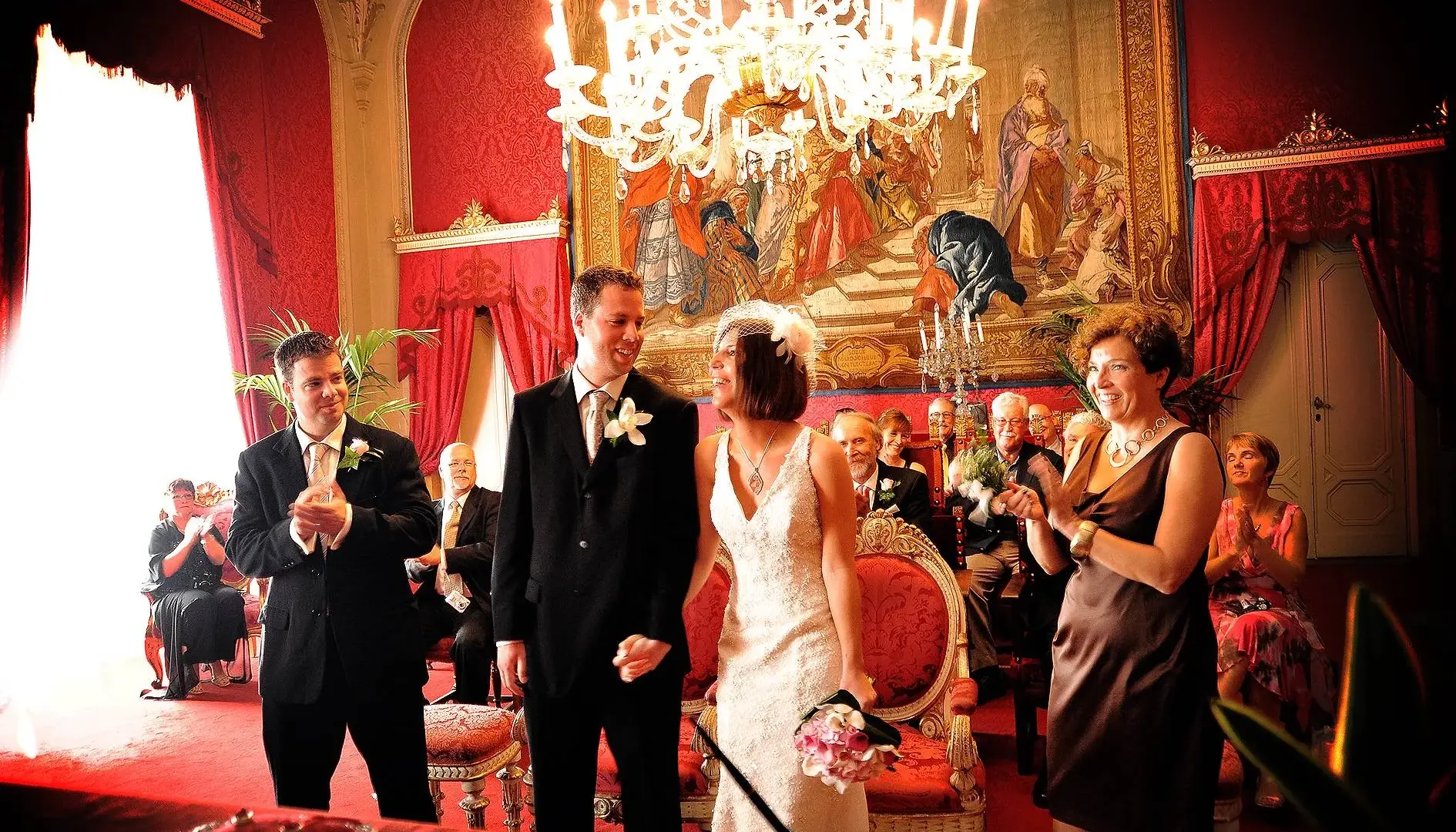
Many couples arrive at their first planning call already half convinced they should give up on a legal wedding in Italy. Somebody told them it is a nightmare: endless documents, offices that never answer, rules nobody can explain. So they plan to sign at home and keep Italy for a symbolic ceremony.
A symbolic ceremony is a lovely choice, when it is what you want. It shouldn’t be a choice made out of fear. Foreign couples get legally married in Italy every week, and for most of them the paperwork turns out to be a list of steps done in the right order, with the right people.
In short
- It is doable. Foreign couples get legally married in Italy every week.
- There is no single procedure. It depends on your nationality, where you live and your story.
- Much online advice is out of date. Rules change, so check what applies to you today.
- The famous town hall is not always the best one. Smaller towns often offer more dates and more time.
- The right professionals make it simple. Choose people who handle civil weddings regularly.
Why there is so much confusion
Search online and you will find a different answer on every page. There is a reason: there is no single procedure. What you need depends on your nationality, on where you live, on whether one of you has been married before, and sometimes on the town where you marry. Two friends from the same country who married in Italy a few years apart may have followed different steps, because the rules on their side changed in between.
On top of that, much of what circulates is out of date. Procedures change: new European forms have replaced some translations, some countries have joined the apostille system, consulates move appointments online. Advice that was right five years ago can send you down the wrong path today.
And sometimes the fear comes from the people meant to help. A planner who has never followed a civil wedding from start to finish may find it simpler to tell you it is too complicated. That doesn’t mean it is.
What it really involves
In broad terms, every legal wedding in Italy needs the same few things:
- Proof that each of you is free to marry, the document Italy calls Nulla Osta. How you get it depends on your country: some couples prepare it at home, others obtain it in Italy at their consulate.
- In some cases translations, apostilles or legalisations. Not everyone needs them, so find out before you pay for any.
- A declaration at the town hall a few days before the wedding. For most couples, being in Italy about three working days before is enough.
- Two witnesses and, if one of you or one of the witnesses doesn’t speak Italian, a sworn interpreter.
- After the wedding, the right certificate to register your marriage at home.
None of this is difficult in itself. What makes the difference is knowing which steps apply to you, in what order, and how long each one takes in that particular town.
The famous town hall is not always the right one
Some of Italy’s town halls are breathtaking, and couples often choose them from a photo. A beautiful room, though, is only one part of the decision. Before you set your heart on one, it helps to know a few things:
- Popular town halls in big cities can be expensive for couples who don’t live there, and often offer only a few days or time slots.
- The ceremony may be short, with another couple waiting for the next slot.
- The room may hold fewer guests than you have invited.
- Getting there can be complicated: historic centres often have limited traffic zones, so cars and coaches can’t always reach the door.
- Some towns have their own rules on photographers, music, decorations or confetti.
Meanwhile, a few kilometres away, a smaller town may have a frescoed room in a medieval palace, more dates, a relaxed pace and a mayor or councillor happy to take their time with you. And in some towns a civil wedding can also be celebrated in villas, castles or gardens the town has authorised.
None of this means you should avoid the famous places. It means the choice is better made with someone who knows both.

The right professionals make it simple
The couples who find it easy are not the lucky ones. They are the ones who worked with professionals who handle civil weddings regularly: planners who know the procedure for each nationality, which town halls suit which kind of wedding, and how to book appointments, sworn translators and interpreters so that everything falls into place.
When you talk to a planner, ask a few direct questions:
- Have you organised legal weddings for couples of our nationality?
- Which documents will we need, and which can we prepare at home?
- Which town halls would you suggest for our date and our number of guests, and why?
- Will someone come with us to the appointments in Italy?
A professional who answers clearly, without making it sound frightening, is usually the right one. If you are told that a legal wedding is impossible, ask why. Sometimes there really is a limit, but often it is only a question of experience.
Getting married legally in Italy is not reserved for the brave or for Italian citizens. With the right team it is one more part of your wedding, and one you will be glad you didn’t give up.
Find wedding planners, sworn interpreters and officiants across Italy on WedEscape.